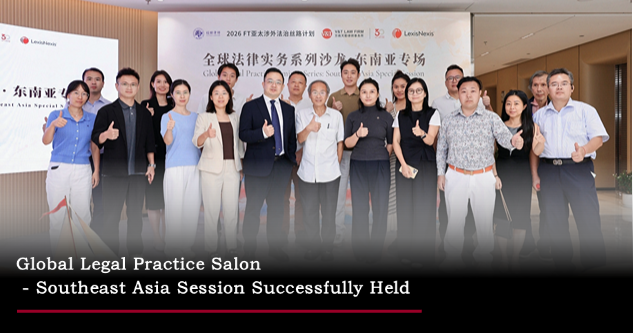

The
“Series Seminar on Cross-Border Investment Legal Compliance for Chinese
Enterprises in Southeast Asia (Thailand and Indonesia Sessions),” jointly
initiated by Starry Law Firm and the Shenzhen Enterprise Going Global Legal
Services and Fact-Finding Centre, was successfully held at the Shenzhen
Enterprise Going Global Legal Services and Intellectual Property Centre
(International Arbitration Building).

Under
the theme “Legal Expertise as the Sail, Guiding Overseas Expansion,” the event
focused on Thailand and Indonesia, two popular destinations for Chinese
enterprises expanding overseas. It provided a systematic analysis of investment
structures, market-access rules, implementation pathways, and the compliance
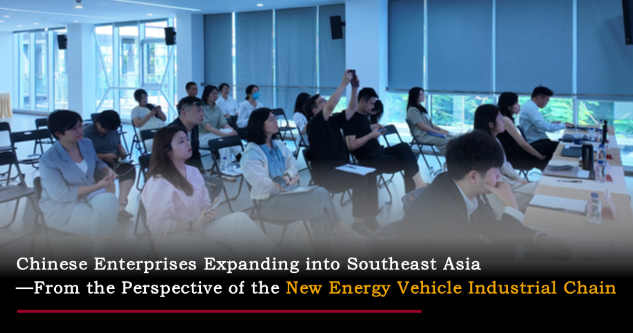
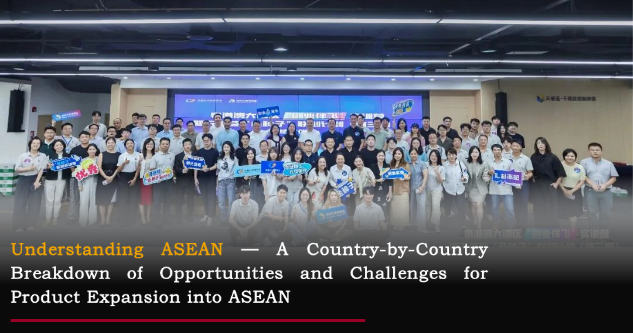
risks of greatest concern to businesses. The seminar attracted a large number
of business leaders, investors, and in-house legal professionals planning their
Southeast Asia presence.
I. Expert
Presentations
Attorney
Pan Chenxing, Founder of Starry Law Firm Thailand and Indonesia, delivered a
systematic analysis of Thailand’s investment environment and foreign investment
regulatory framework. Drawing on years of practical experience supporting
Chinese enterprises establishing operations in Thailand, Attorney Pan examined
common investment pathways and structural arrangements in depth.

Attorney
Pan noted that Thailand applies differentiated regulation to industries and
shareholding ratios under the Foreign Business Act (FBA), while Board of
Investment (BOI) policies provide exemption pathways for promoted activities.
In practice, however, enterprises often face compliance risks because of
uncertainty in business classification and pathway selection. Against a
backdrop of increasingly stringent enforcement, reliance on nominee shareholder
arrangements is more likely to trigger regulatory scrutiny.

Meanwhile,
Attorney Deng Mingyue, Founding Partner of Starry Law Firm Indonesia, led the
Indonesia session. Starting from the country’s business environment, she
outlined Indonesia’s legal system, investment access rules, and operational
establishment process. Attorney Deng stressed that, despite Indonesia’s market
and resource advantages, foreign ownership restrictions, approval procedures,
and employment rules remain highly complex from a compliance perspective.
Without a systematic compliance framework, enterprises may incur additional
costs and legal risks during both project implementation and day-to-day
operations.
II.
Interactive Discussion
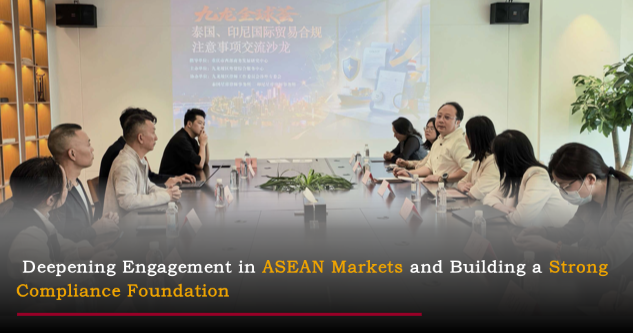
During
the interactive session, participating enterprises engaged in in-depth
discussion around recurring issues encountered in actual operations. Compliance
risks associated with nominee shareholder arrangements in Thai foreign-invested
structures and employment matters in Indonesia emerged as key topics of
interest.


Risks of
Nominee Shareholder Arrangements in Thailand
Q: A
company establishes a joint venture in Thailand and asks a Thai individual
shareholder to hold shares on its behalf. During operations, that Thai
shareholder adjusts the shareholding structure or even changes shareholders
without the Chinese party’s consent. How should the company protect its rights
and manage the risks in this situation?
Attorney
Pan explained that nominee arrangements are common in Thai foreign-invested
enterprises, but the scope for remedies after a dispute is very limited. In
Thailand, nominal shareholding is itself unlawful. Consequently, when faced
with such issues, many enterprises are reluctant to seek relief through police
reports or court proceedings, because formal proceedings may also lead to
scrutiny of the enterprise’s own compliance position.
Attorney
Pan further noted that Thailand’s scrutiny of nominee arrangements now focuses
on commercial substance rather than formal compliance. Regulators will
generally examine:
• whether the Thai
shareholder has made a genuine capital contribution;
• whether the Thai
shareholder participates in operational decision-making; and
• whether the Thai
shareholder has a legitimate source of funds and the capacity to perform the
relevant obligations.
1. The key is not
post-event remediation, but advance planning
• Avoid purely nominal
shareholder arrangements wherever possible.
• Select Thai local
shareholders who genuinely participate in the business and understand its
operations.
2. Protect the
Chinese party’s control through shareholding structure design
• Adopt an ordinary-share
and preference-share structure to separate dividend rights from voting rights.
• Execute comprehensive
shareholders’ agreements.
• Provide for veto rights
over material matters, board control rights, and other appropriate safeguards.
In short, it is far
preferable to design the structure properly when the company is established
than to attempt remedies after a dispute arises.
Termination
of Employment Relationships in Indonesia
Q: In
Indonesia, what differences apply to compensation when employees under
fixed-term employment agreements (PKWT) and indefinite-term employment
agreements (PKWTT) resign, agree to terminate employment, or are dismissed?
Attorney
Deng explained that Indonesia’s labour law framework provides materially
different compensation mechanisms for different contract types. The Job
Creation Law and its implementing Government Regulation No. 35 of 2021
introduced a uniform compensation regime for fixed-term employment agreements
(PKWT). Where an Indonesian employee has worked continuously for at least one
month, the employer must pay compensation when the contract expires. The amount
is calculated pro rata by reference to the employee’s actual months of service:
(months of service ÷ 12) × one month’s salary. If the employer unilaterally
terminates the contract early, it must pay both the pro-rated compensation and
an additional contractual penalty equivalent to the employee’s full salary for
the remaining contract term.
For
employees under indefinite-term employment agreements (PKWTT), the above
compensation regime does not apply. However, where the company terminates
employment, employees may be entitled by law to severance pay calculated by
reference to length of service, a long-service award for employees with three
or more years of service, and compensation for unused annual leave, among other
entitlements. This creates a compensation structure centred on long-term
protection.
Whether
dealing with nominee-shareholder risks in Thailand or employment compensation
in Indonesia, the underlying issue is often that enterprises have not completed
sufficient structural design and rule-mapping at the market-entry stage. Only
by designing legal compliance solutions at the outset of an investment and
complying strictly with local legal requirements throughout operations can
enterprises achieve manageable risks and stable, long-term development in
Southeast Asia’s complex and evolving markets.